

How to plan a photoshoot for school marketing
Having had years of experience creating prospectus, marketing and website photography for schools, colleges, academies and universities I have learnt a lot about what works and what doesn’t.
Every school is different, and no two shoots are ever the same. Over the years I’ve photographed a wide range of schools and colleges across the South East, and one thing that’s always clear is this: planning helps the photographer get better photos for your school or collage.
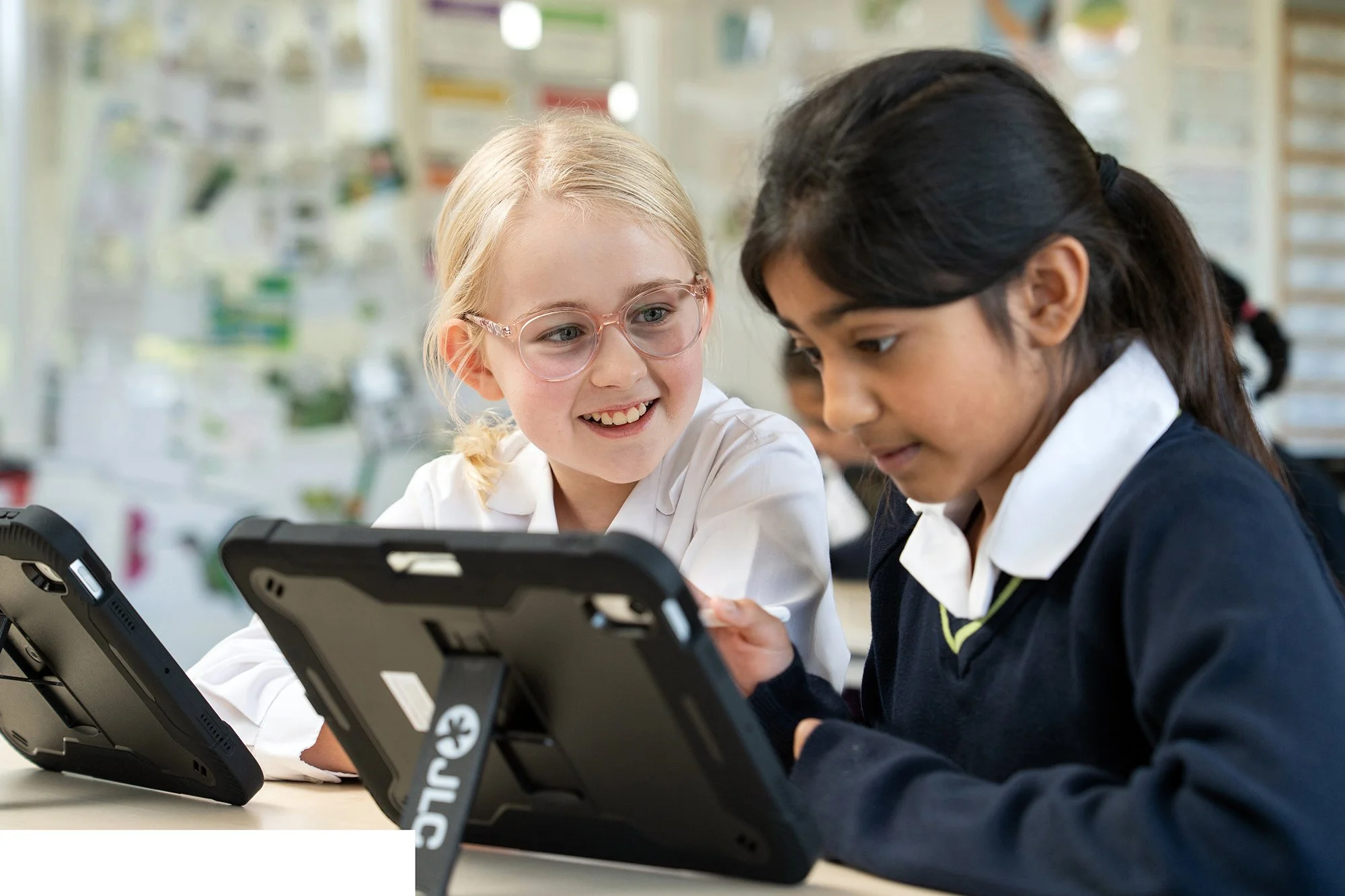
Working together
Planning a School Photography Shoot
This isn’t about overcomplicating things, but having a rough plan in place makes a huge difference to how smoothly the day runs and how much we can realistically cover. Nothing is worse than just being told to “wander around and see what you can find that looks good”.
I have created an in-depth brochure that goes into a lot of detail on how to prepare but, as it has been so well received and has even published in Independent Schools Magazine I thought it was also worth sharing on my website.
Key points are:
· Make sure the teachers know when to expect the photographer and ask that they have an activity ready
· Try to have desks as clutter free as possible.
· Break time can offer the opportunity for relaxed natural friendship pictures.
· Check for clashes with any sporting fixtures or ‘activity’ days
Some of the best images are unexpected and come when nothing is staged at all. Break times are ideal for this. Students relax, interact naturally, and you get those genuine moments that are hard to recreate in a classroom.
I’ll often step back and just observe during these times. Those “in-between” moments—friendships, laughter, movement—are often the strongest images from the day and can’t be set up.
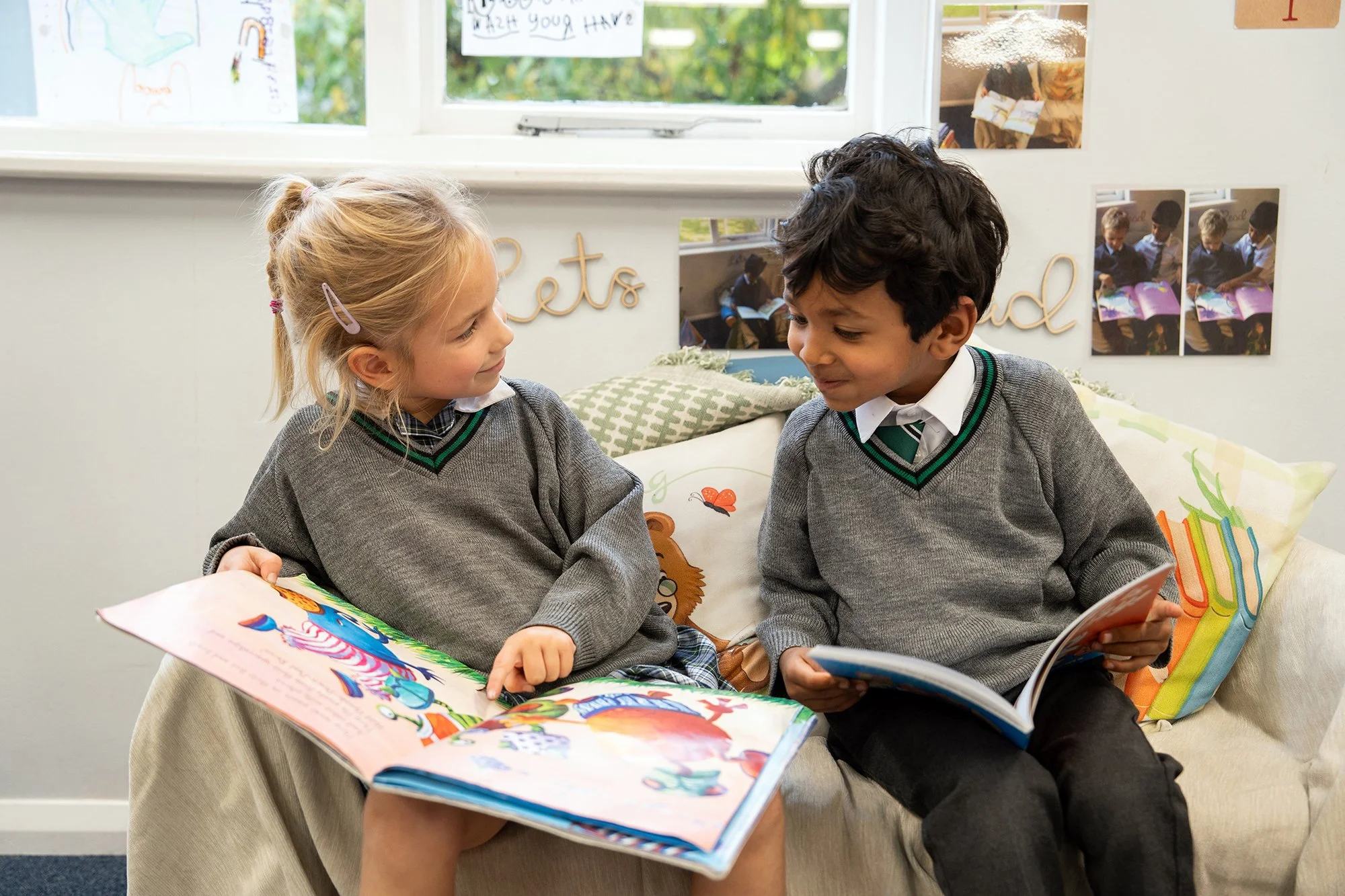
Real friendships show
Timings
When should you book your photoshoot?
I photograph schools throughout the year, but certain times naturally work better. The start of the academic year is great for fresh uniforms, smart wall displays and great colours outside. The summer term however gives you better light, better weather and more relaxed students.
It’s always worth looking at your timetable in advance and thinking about where the strongest visual opportunities are. A bit of planning here avoids that “wandering around hoping something is happening” approach, which rarely delivers the best results.
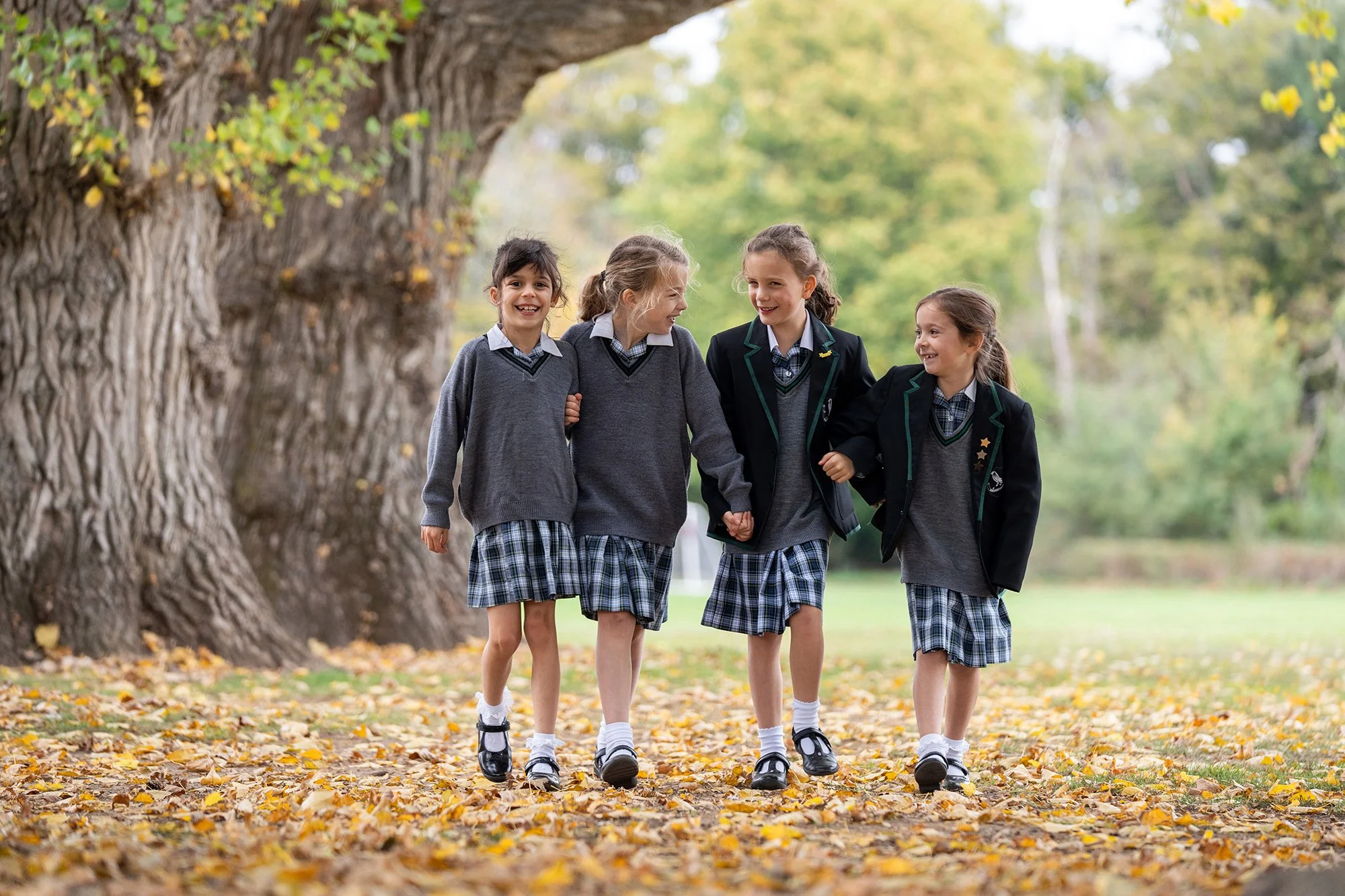
Beautiful time of year for a photoshoot
Timings on the day
Try not to cram as much in as possible however tempting it is as I believe it is better to spend a little longer and get some amazing images than it is to visit every single classroom for only 5 minutes. Less is more. Having a schedule will allow you to maximise your photographers time and so you get more, high quality photos from the photoshoot
Certain subjects need a bit of thought – particularly science. It is always worth asking the science teacher to prepare something (all science teachers love the ‘flaming hands’ but it is a photo that virtually every school has) Experiments that bring the students heads up so their faces can be seen are great as are ones when they work in pairs. If it isn’t possible to prepare something in advance then I have set up many science experiments over the years but that does slow things down as I have to rummage through cupboards to find visually interesting items!
Other classes need to warm up. Sport, art, DT and extra curricular activities generally need set up time so arriving at the start of their lesson is generally a waste of time.
When planning the schedule consider:
· Set up and packing down time.
· Allow between 15-45 mins per location (depends on subject, complexity of the room and age of the students)
· Factor in the time it takes to move from one location to another.
· Allow for some flexibility in the timings through out the day
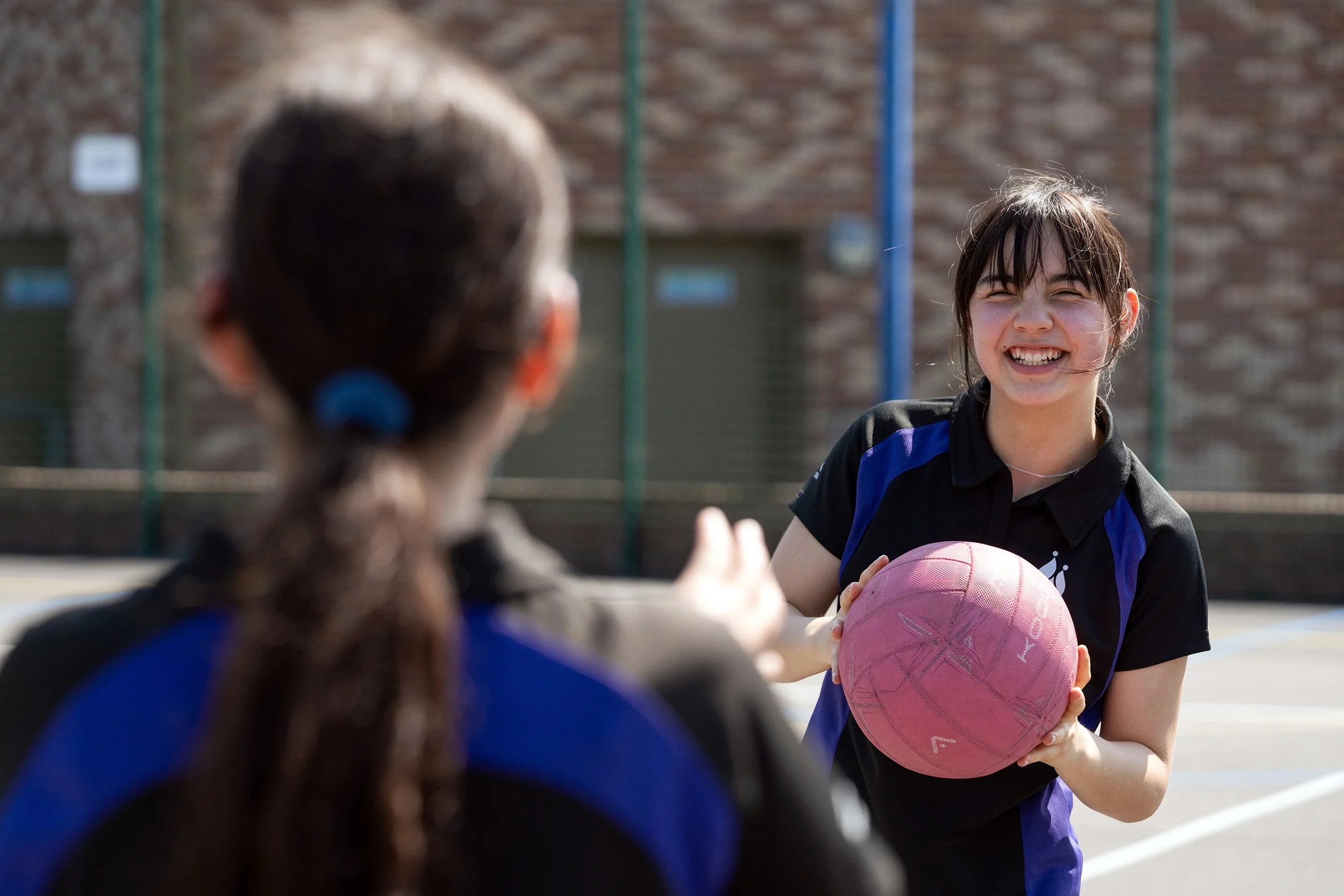
School sports photography
Choosing the Right Students
Not every student needs to be a natural performer, but it does help to pick those who are reasonably confident and happy to be involved. Especially with younger students, a bit of personality goes a long way. It also often works best if students are friends as that will come across in the photo.
My approach is quite relaxed. Generally I like to set up the shot and gently guide things initially but then I look for the natural interaction that comes from it. Drama students are often a good choice.
· Choose confident rather than shy students.
· Genuine friendships come across well in photos
· Drama students often work well in school photos.
· Year 10 is usually the most awkward year group to work with!
· Give teachers and 6ths formers a heads up before hand as they always like to look their best in pictures.
· Make sure you have a printed list of who can not be photographed.
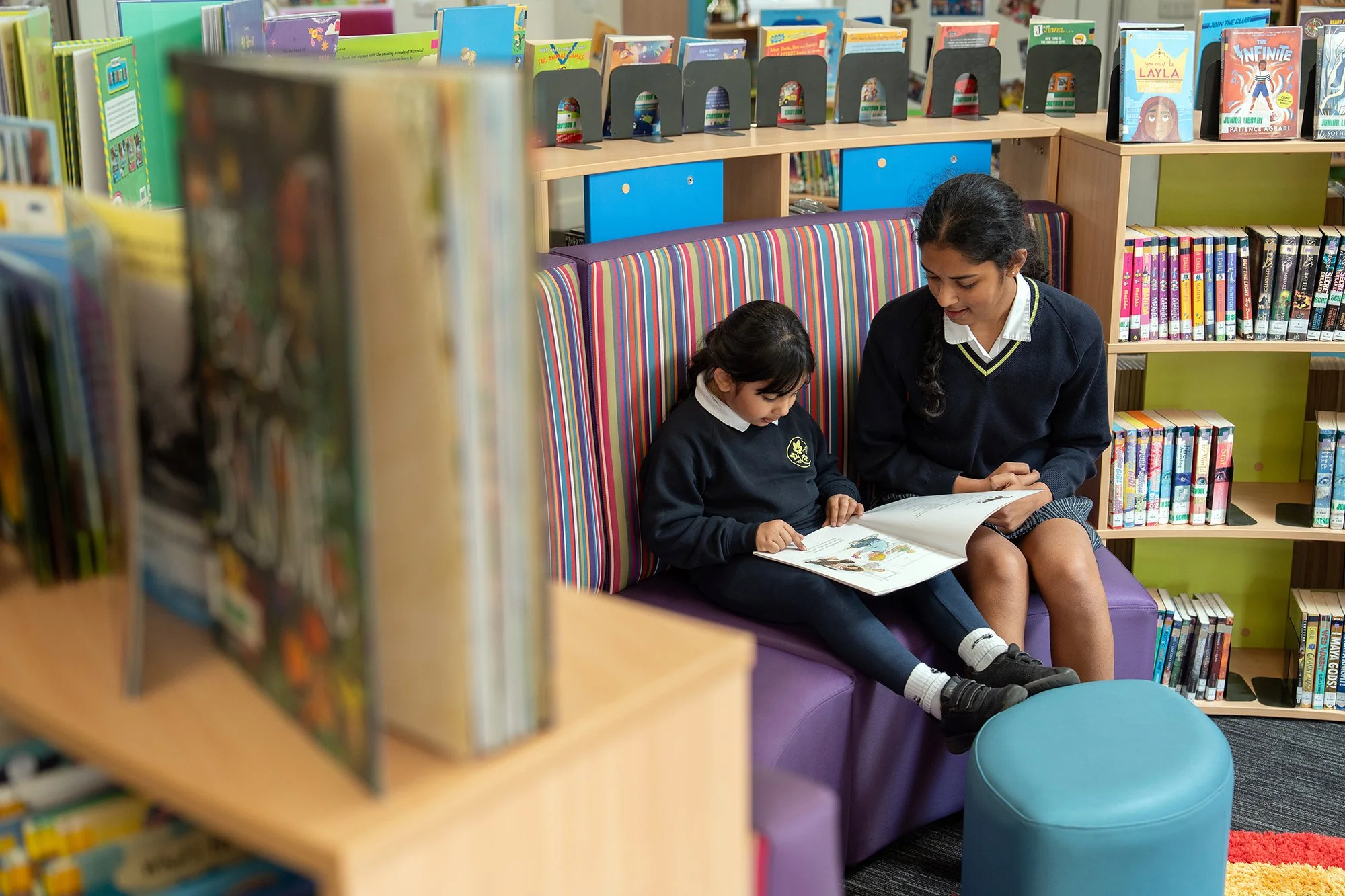
Peer mentorship in the Library
Don’t Forget the Environment
Schools, colleges and universities often have wonderful open space that can look great in photos. Buildings and grounds matter more than people sometimes realise and it is important to show it as they help give context to everything else.
Wide shots of spaces, corridors, outdoor areas, or standout features all help build a more complete picture of the school but if there is no one already in the space then it can take some time to put student in and make it look natural.
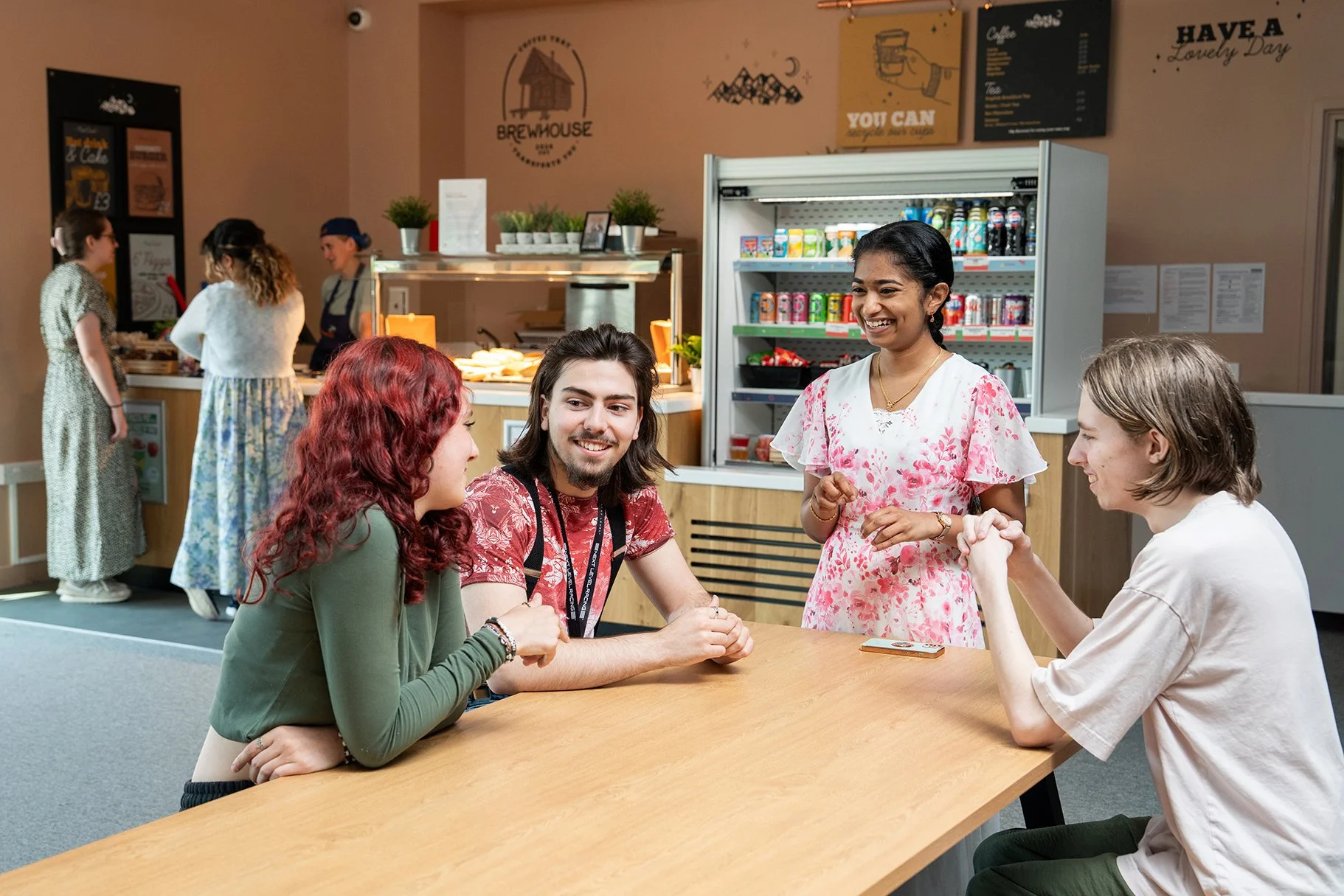
6th form life
Lastly…
Don’t forget to let your photographer know if you need specific sizes, ‘empty’ areas for copy or anything else. Generally you would expect to get mainly landscape images mixed with portrait pictures but if you require more of something let your photographer know in advance.
Your photographer is busy looking at the composition, thinking of activities, checking backgrounds and trying to get the best out of the students. I always do a uniform check when we start but a second set of eyes throughout the day is very useful as sometimes jewellery / hairbands etc try to slip by unnoticed…
If you’re planning a shoot or just thinking about it, feel free to get in touch. I’m always happy to talk through ideas and help you work out what would work best for your school.
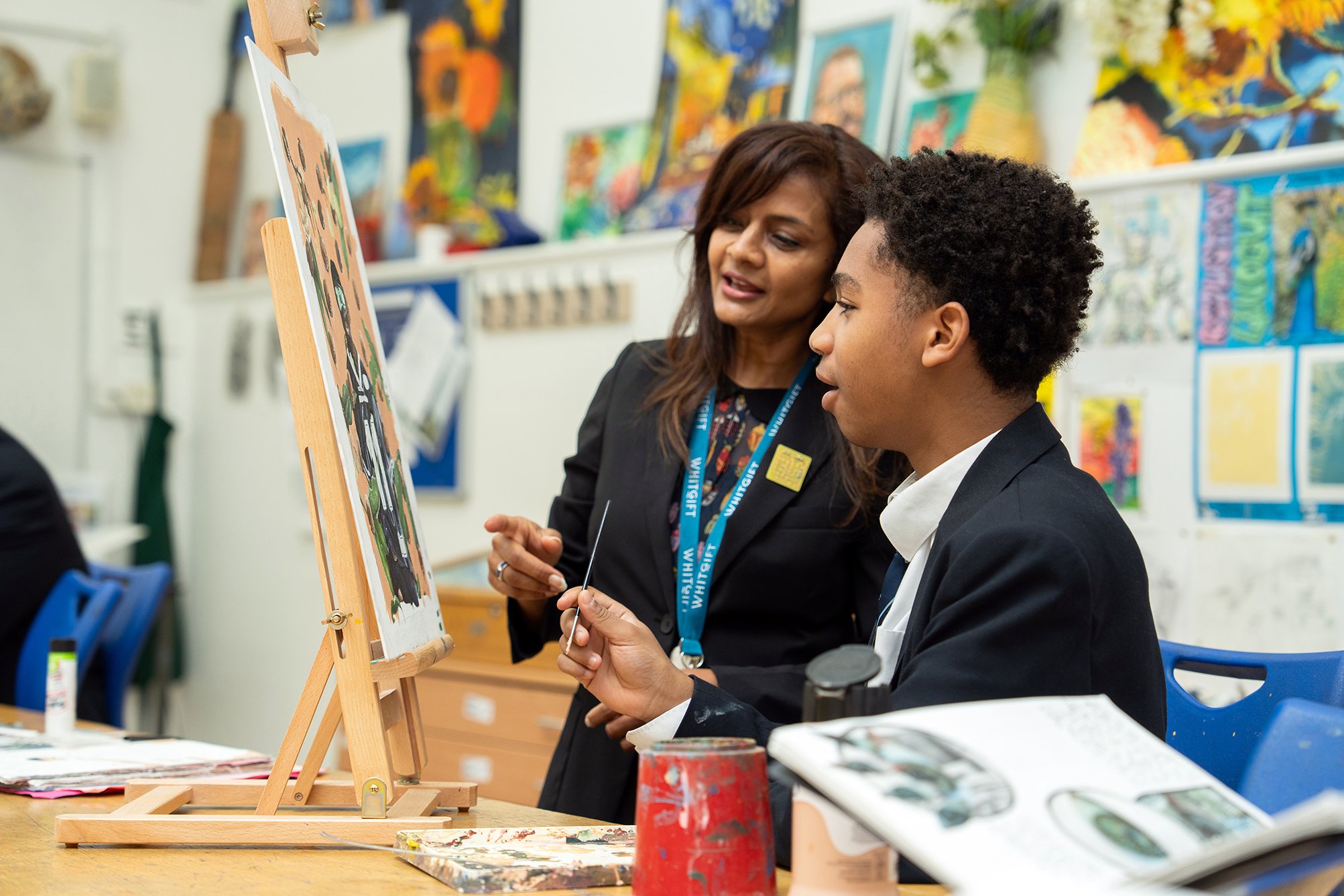
Working with a teacher in Art